
Understanding Smart Pointers in C++
Owning Memory Without Losing Your Mind

Introduction
“Resource management is a solved problem in C++. It is just not solved automatically.” — — Bjarne Stroustrup
Manual memory management is one of the defining powers and dangers of C++. Raw pointers give you control, but they also make it easy to leak memory, double free objects, or access memory that no longer exists. Smart pointers exist to encode ownership directly into the type system so that memory is released correctly and predictably. They do not remove responsibility from the programmer. They make responsibility explicit.
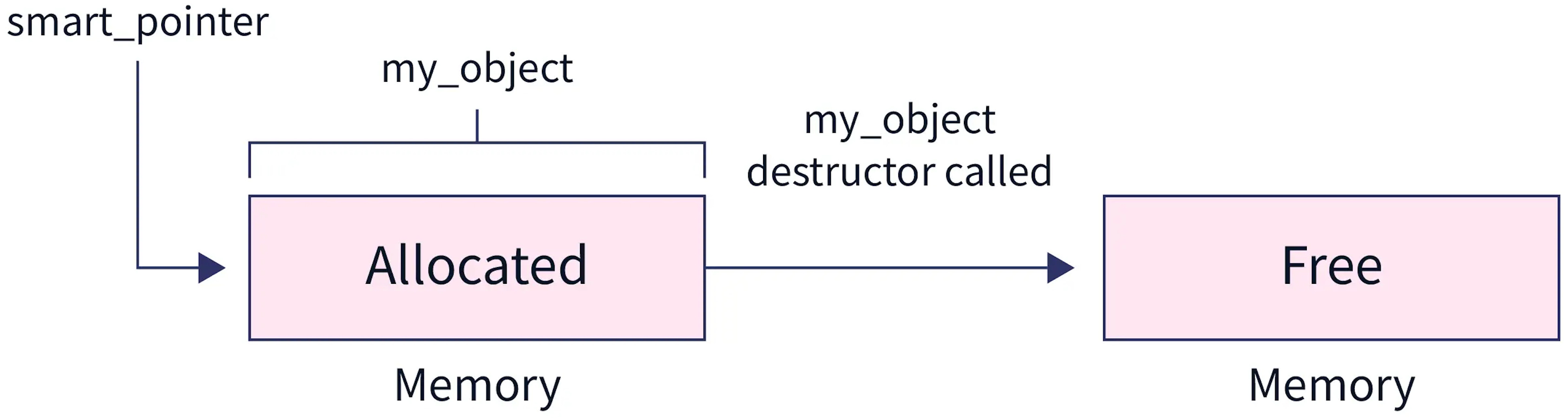
What a Smart Pointer Is
Smart pointers in C++ are wrapper classes around raw pointers that automatically manage the lifetime of dynamically allocated objects, thereby preventing memory leaks and making code exception-safe. They implement the Resource Acquisition Is Initialization (RAII) idiom, ensuring that resources are released when the smart pointer goes out of scope.
Unlike raw pointers, smart pointers express ownership. This is the key idea. Once ownership is clear, destruction becomes deterministic and bugs related to memory management become much harder to write.
How RAII Works
The mechanism leverages the guaranteed automatic construction and destruction of objects with scoped lifetimes (typically stack-allocated variables):
Resource Acquisition (Initialization): When an object is created, its constructor acquires the necessary resource (e.g., allocating memory, opening a file, locking a mutex, or establishing a database connection).
Resource Release (Destruction): When the object goes out of scope, its destructor is automatically called, and this is where the resource is released (e.g., deallocating memory, closing the file, unlocking the mutex).
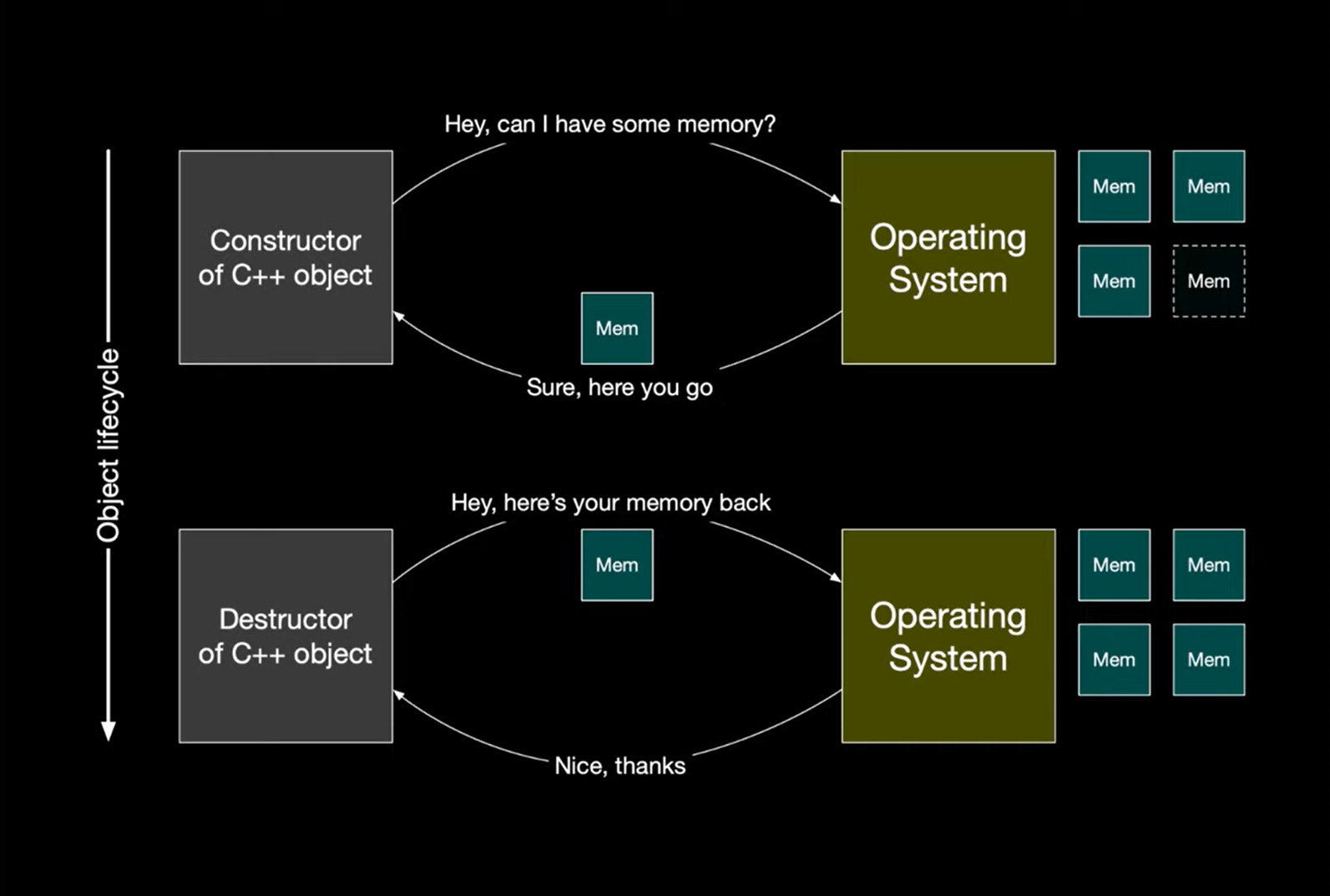
C++ guarantees that the destructors for stack-allocated objects are always called when the object goes out of scope, regardless of how the scope is exited (normal return, break, continue, or an exception being thrown). This prevents resource leaks and simplifies error handling significantly.
The C++ Standard Library, starting with C++11, provides three main types of smart pointers, defined in the <memory> header: std::unique_ptr, std::shared_ptr, and std::weak_ptr.
unique_ptr and Exclusive Ownership
std::unique_ptr represents exclusive ownership of a dynamically allocated object. Only one unique_ptr can own a given object at a time. This is enforced by the type system.
Basic Syntax and Creation
The preferred way to create a std::unique_ptr is using the std::make_unique helper function (available since C++14).
#include <memory>
#include <iostream>

int main() {
    // 1. Preferred method: using std::make_unique (C++14 onwards)
    std::unique_ptr<int> ptr1 = std::make_unique<int>(42);

    // 2. Alternative method: direct use of ‘new’ (less preferred, but
    // works in C++11)
    std::unique_ptr<int> ptr2(new int(99));

    // Access the value
    std::cout << “Value of ptr1: “ << *ptr1 << std::endl;
    std::cout << “Value of ptr2: “ << *ptr2 << std::endl;

    // When main() ends, both ptr1 and ptr2 go out of scope,
    // and the dynamically allocated memory is automatically freed.
    return 0;
}
An example.
#include <memory>
#include <iostream>

struct File {
    File() { std::cout << “open\n”; }
    ~File() { std::cout << “close\n”; }
};

int main() {
    std::unique_ptr<File> f = std::make_unique<File>();
}
When f goes out of scope, the File object is destroyed automatically. There is no delete call and no ambiguity about ownership.
unique_ptr cannot be copied. It can only be moved. This makes ownership transfer explicit and safe.
std::unique_ptr<File> a = std::make_unique<File>();
std::unique_ptr<File> b = std::move(a);
After the move, a no longer owns anything. This prevents accidental double deletion.
 unique_ptr<A> p (new A);

 // COMPILE ERROR! Can’t copy unique_ptr
 unique_ptr<A> p2 = p;
// p is allocated as a new int on heap memory
std::unique_ptr<int> p(new int); 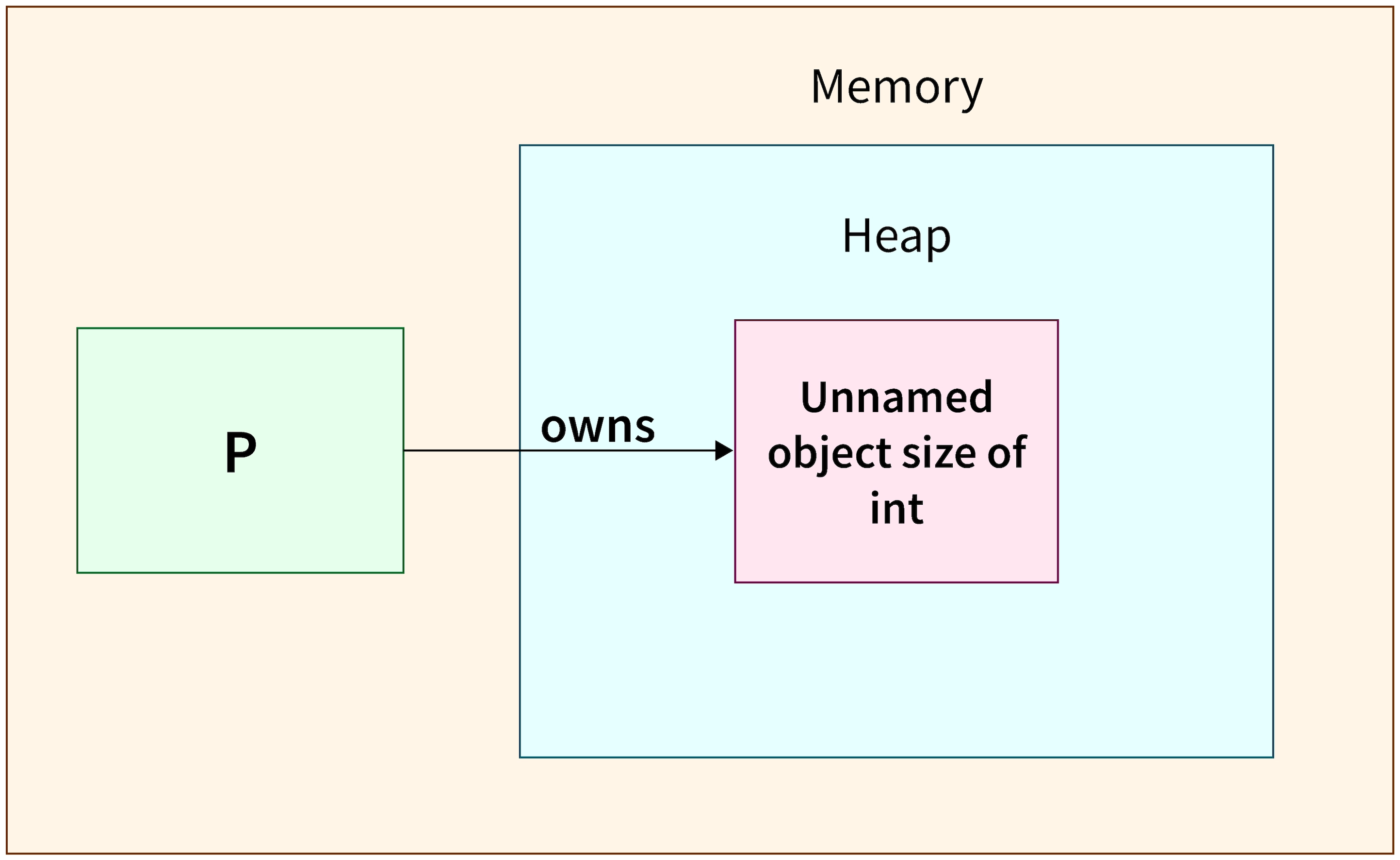
If the unique pointer is destroyed, the allocated object on the heap is destroyed
{
  unique_ptr<int> p(new int);
  // using p

} // p's destructor is called here. This destroy's the int object.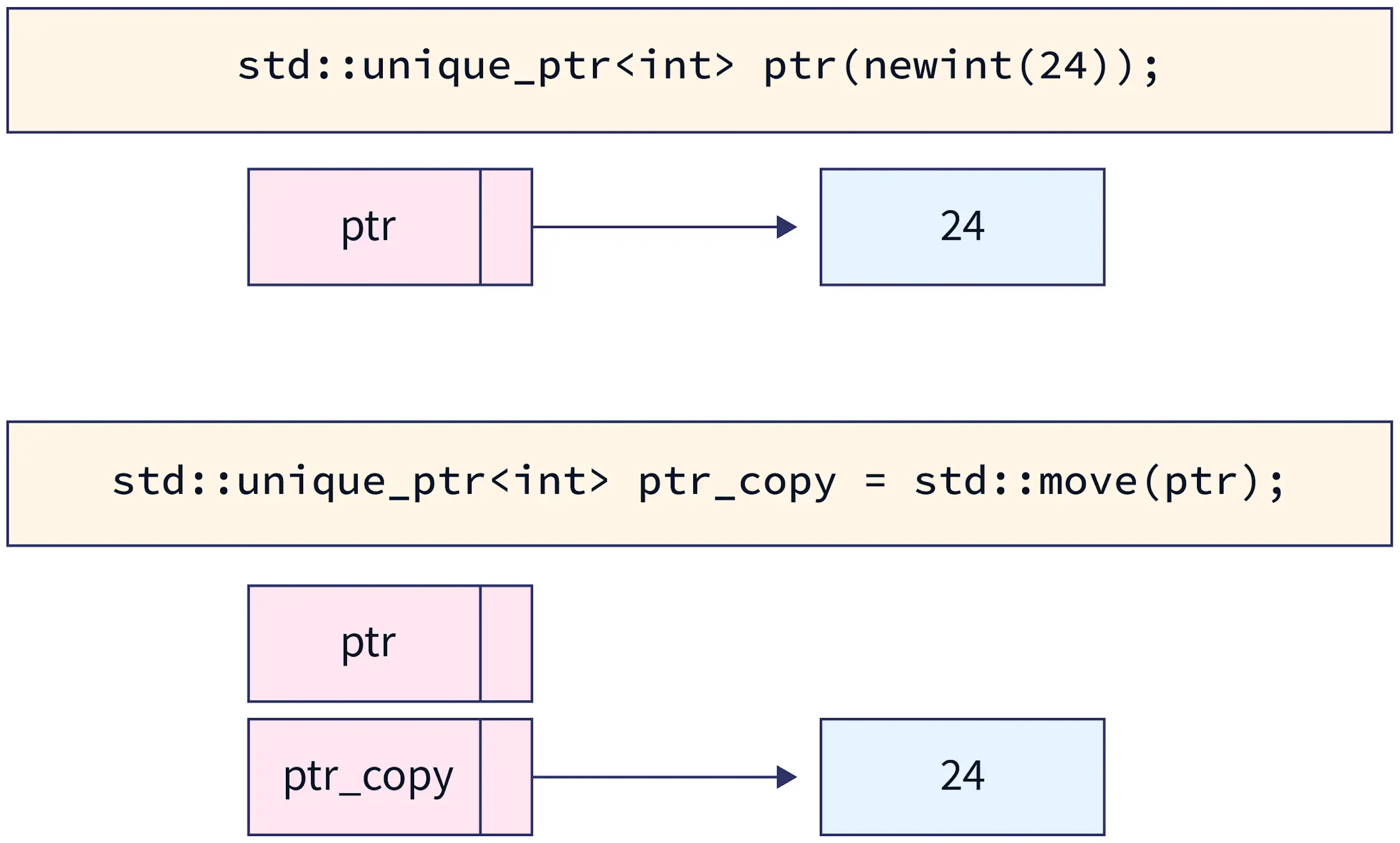
𝐋𝐞𝐚𝐫𝐧 𝐭𝐨 𝐛𝐮𝐢𝐥𝐝 𝐆𝐢𝐭, 𝐃𝐨𝐜𝐤𝐞𝐫, 𝐑𝐞𝐝𝐢𝐬, 𝐇𝐓𝐓𝐏 𝐬𝐞𝐫𝐯𝐞𝐫𝐬, 𝐚𝐧𝐝 𝐜𝐨𝐦𝐩𝐢𝐥𝐞𝐫𝐬, 𝐟𝐫𝐨𝐦 𝐬𝐜𝐫𝐚𝐭𝐜𝐡. Get 40% OFF CodeCrafters: https://app.codecrafters.io/join?via=the-coding-gopher
shared_ptr and Shared Ownership
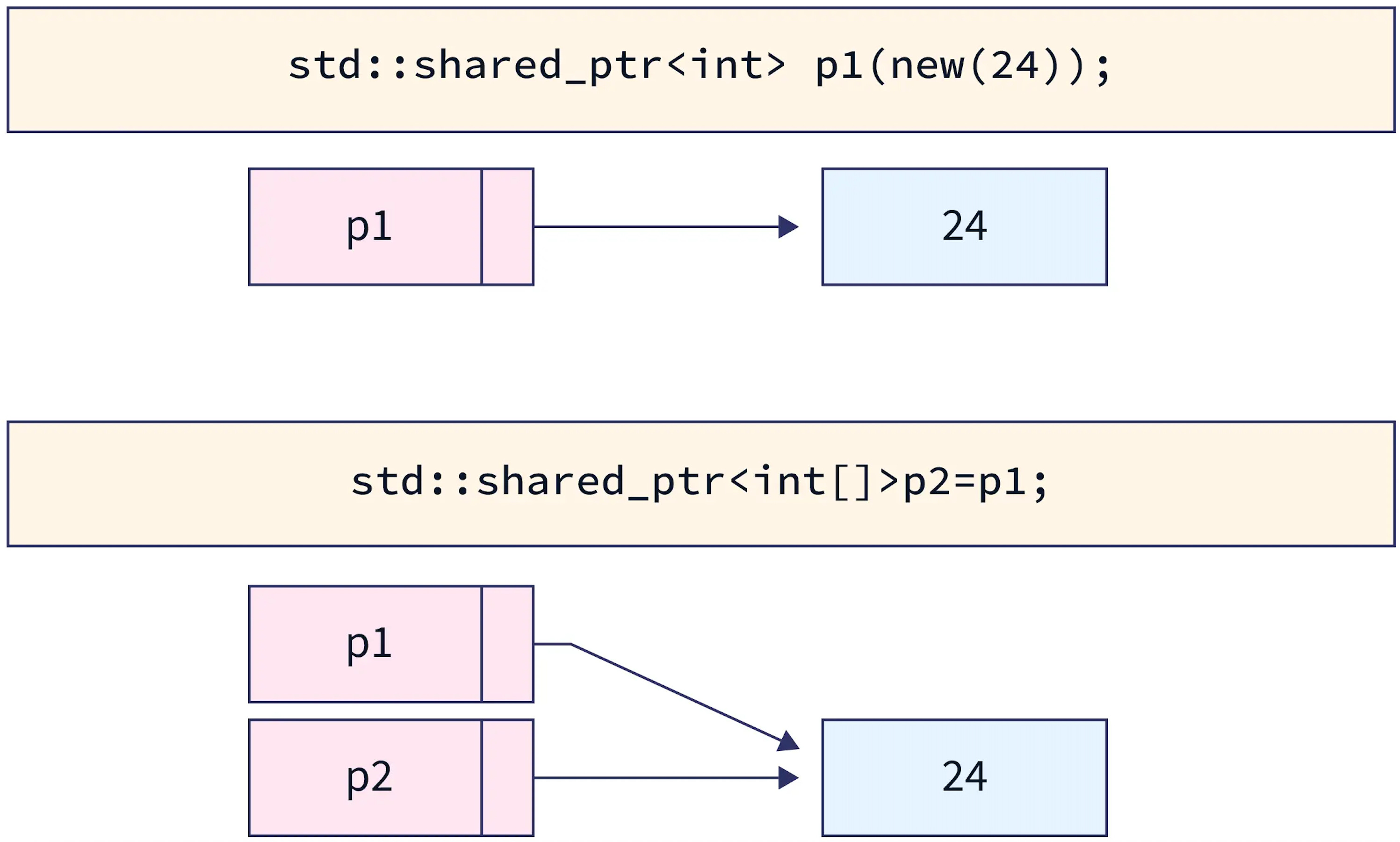
std::shared_ptr represents shared ownership. Multiple shared_ptr instances can refer to the same object. The object is destroyed only when the last shared_ptr releases it.
#include <iostream>
#include <memory> // For std::shared_ptr and std::make_shared

struct Data {
    ~Data() {
        std::cout << “Data object destroyed\n”;
    }
};

int main() {
    // Create first shared_ptr (p1), ref count 1.
    auto p1 = std::make_shared<Data>();
    std::cout << “After p1 creation: p1.use_count() = “ <<
    p1.use_count() << “\n”; // Output: 1

    // Create p2, copy p1. Both share ownership, ref count 2.
    auto p2 = p1;
    std::cout << “After p2 creation: p1.use_count() = “ <<
    p1.use_count() << “\n”; // Output: 2
    std::cout << “After p2 creation: p2.use_count() = “ <<
    p2.use_count() << “\n”; // Output: 2

    // Local scope affects count.
    {
        auto p3 = p1; // p3 is another copy, count 3.
        std::cout << “Inside scope: p1.use_count() = “ << p1.use_count()
        << “\n”; // Output: 3
    } // p3 goes out of scope here, count becomes 2.

    std::cout << “After p3 goes out of scope: p1.use_count() = “ <<
    p1.use_count() << “\n”; // Output: 2

    // Reset p1 to release ownership. Count 1, p1 becomes null.
    p1.reset();
    std::cout << “After p1.reset(): p2.use_count() = “ << p2.use_count()
    << “\n”; // Output: 1

    // Data object destroyed message appears here as p2 goes out of
    // scope and count drops to zero.
    return 0;
}p1, p2, and p3 all share ownership of the same Data object at different times. p3 releases its ownership early when leaving its scope. When the final owner (p2) goes out of scope, the reference count drops to zero and the object is destroyed.
shared_ptr uses reference counting under the hood. This introduces overhead and makes ownership less obvious. For this reason, shared_ptr should be used deliberately, not by default.
weak_ptr and Breaking Cycles
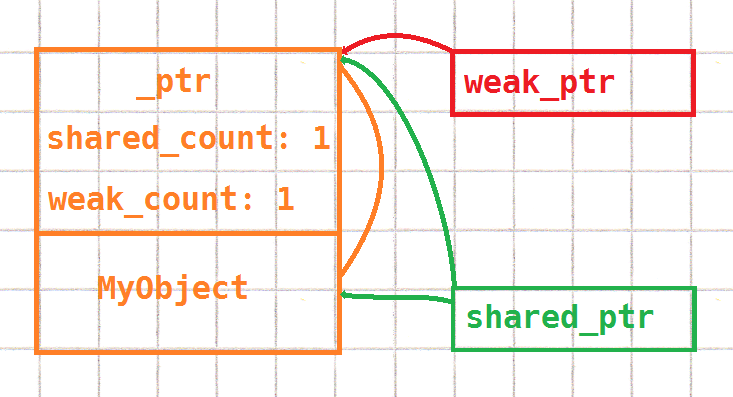
std::weak_ptr is used to observe an object managed by shared_ptr without contributing to its reference count. It exists primarily to break reference cycles.
Consider two objects that reference each other using shared_ptr. Their reference counts never reach zero, causing a memory leak. weak_ptr solves this by allowing one direction of the relationship to be non owning.
#include <memory>

struct B;

struct A {
    std::shared_ptr<B> b;
};

struct B {
    std::weak_ptr<A> a;
};
Here, A owns B, but B only observes A. When A is destroyed, B can detect that the object no longer exists by checking whether the weak_ptr has expired.
Smart Pointers and RAII
Smart pointers are one application of RAII, but the idea is broader. RAII ties resource lifetime to scope. Memory, file descriptors, locks, and sockets can all be managed this way.
Smart pointers shine because they integrate directly with language semantics. Scope exit triggers destruction. Exceptions do not skip cleanup. Control flow becomes simpler and safer.
Performance Characteristics
unique_ptr has zero overhead compared to a raw pointer. It is just a wrapper that deletes the object in its destructor.
shared_ptr has overhead. It allocates a control block and updates reference counts on copy and destruction. This overhead is often negligible but can matter in tight loops or low latency systems.
Because of this, unique_ptr should be preferred whenever exclusive ownership is sufficient.
Common Mistakes
A common mistake is using shared_ptr when unique_ptr is appropriate. This hides ownership relationships and can lead to accidental cycles.
Another mistake is creating shared_ptr from raw pointers multiple times. This creates multiple control blocks and leads to double deletion.
int* raw = new int(5);
std::shared_ptr<int> p1(raw);
std::shared_ptr<int> p2(raw);
This code is bad because it creates two independent shared_ptrs (p1, p2) from the same raw pointer, each thinking it owns the resource, leading to a double-delete crash when they go out of scope, as std::shared_ptr is designed for shared ownership, not multiple independent managers of the same memory. The correct approach uses std::make_shared to create one shared_ptr that manages the object and then copies that shared_ptr, or pass a raw pointer to a shared_ptr constructor only once.
Smart Pointers and APIs
Modern C++ APIs use smart pointers to express ownership intent. Returning a unique_ptr signals transfer of ownership. Accepting a reference or raw pointer signals non ownership. Accepting a shared_ptr signals shared lifetime.
This makes interfaces self documenting and harder to misuse.
Why Smart Pointers Matter
Smart pointers do not eliminate the need to understand memory. They encode memory ownership directly into types so that the compiler can help enforce correct behavior.
Once you internalize smart pointers, C++ becomes more predictable. You stop thinking about when to delete and start thinking about who owns what. That shift is the real value.
TL;DR.
Types of Smart Pointers
std::unique_ptrOwnership. Enforces unique (exclusive) ownership of the managed object. Only one
unique_ptrcan point to an object at a time.Behavior. It cannot be copied, but ownership can be moved to another
unique_ptrusingstd::move.Use Case. This is the recommended default choice for dynamic memory allocation when shared ownership is not needed. It is highly efficient, typically the same size and speed as a raw pointer.
Creation. Best created using
std::make_uniqueto provide exception safety and better performance than usingnewdirectly.
std::shared_ptrOwnership. Implements shared ownership via reference counting. Multiple
shared_ptrinstances can point to the same object.Behavior. The object is deleted only when the last
shared_ptrowning it goes out of scope or is reset.Use Case. Ideal when multiple parts of a program need to share access to the same dynamically allocated object and its lifetime is complex or not tied to a single scope.
Creation. Best created using
std::make_sharedto avoid separate memory allocations for the object and the control block.
std::weak_ptrOwnership. Provides a non-owning (”weak”) reference to an object managed by a
std::shared_ptr.Behavior. It does not participate in the reference count, so it does not prevent the object from being deleted when all
shared_ptrowners are gone.Use Case. Primarily used to break circular references between
shared_ptrinstances which would otherwise cause memory leaks. You must convert aweak_ptrto ashared_ptr(using thelock()method) before accessing the object to safely check if it still exists.
Why Use Smart Pointers?
Automatic Memory Management. You don’t have to explicitly call
delete, which eliminates a major source of memory leaks.Exception Safety. Memory is automatically deallocated even if exceptions are thrown, ensuring resources are cleaned up correctly as the stack unwinds.
Clarity of Ownership. The smart pointer’s type clearly defines the ownership policy, making the code’s intent easier to understand.
Fewer Bugs. They help prevent common errors like dangling pointers (accessing memory after it’s been freed) and double deletions.
In modern C++, smart pointers should be the default choice over raw pointers for managing dynamically allocated memory. Raw pointers are best used as non-owning observers of memory managed elsewhere, such as function parameters that don’t take ownership.
The ownership semantics stuff is what makes smart pointers actually usable rather than just another abstraction layer. Seen too many codebases where shared_ptr gets used as default because nobody wants to think about lifteimes, then you end up debugging reference cycles at 3am. unique_ptr should be the starting point, escalate only when actually needed.
didn’t lose mind.
mind blown instead 🤯